The Company of Colours
Shadow Box 9
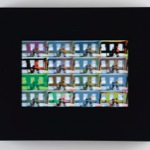
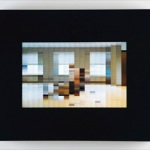
"The Company of Colours" (Shadow Box 9) is the ninth piece in the Shadow Box series of interactive displays with a built-in computerized tracking system. This piece shows a live surveillance camera view constructed out of a palette of named colour swatches that can be rendered by contemporary computers. Every few minutes the piece automatically switches to show the live view constructed with a variety of culturally-significant colour palettes from computer and video game history, including the 4 shades of green of the original Nintendo Gameboy, the eight colours of teletext, and the sixteen colours of the Commodore 64, the Apple II and the ZX Spectrum. The piece emphasizes the limited gamut of colour rendering possible with computers and the way this limitation creates styles of representation.
General info
Spanish name:
La Compañía de los Colores
Year of creation:
2009
Shadow Box
Technique:
Interactive display with built-in computerized surveillance system
Dimensions:
104.5 x 80 x 12 cm
Keywords:
Edition:
6 Editions, 1 AP
Collectors:
Fidelity Art Collection and private collectors
Treatment
Technique:
Projector, computerized surveillance system
Dimensions:
Variable
Keywords:
Edition:
1 Edition, 1 AP
Exhibitions
- Group exhibition, D.I.X., Genève, Switzerland, 2018.
- A different Kind of Order: The ICP Triennial, International Center of Photography, New York City, New York, United States, 2013.
- Rafael Lozano-Hemmer: Trackers, La Gaîté Lyrique, Paris, France, 2011.
- Hyperlinks: Architecture and Design, Art Institute of Chicago, Chicago, Illinois, United States, 2010 - 2011.
- Vigilancias Materializadas, Galería Max Estrella, Madrid, Spain, 2010.
- ARCO '10, Galería Max Estrella, Madrid, Spain, 2010.
- Art Bologna, Galerie Guy Bärtschi, Bologna, Italy, 2010.
- Levels of Nothingness, Guggenheim Museum, New York City, New York, United States, 2009.
- Commissioned by Works & Process at the Guggenheim Museum, celebrating its 25th anniversary together with the Museum's 50th anniversary. Funded by the Colección/Fundación Jumex, Deutsche Bank, German Consulate General and Mexican Cultural Institute.
- Transition States, Haunch of Venison, New York City, New York, United States, 2009.
Credits
- Concept and Direction: Rafael Lozano-Hemmer
- Programming: Stephan Schulz
- Production Assistance: Pierre Fournier, David Lemieux, Conroy Badger
Bibliography
 Alonso, Rodrigo, Rafael Lozano-Hemmer and Paul Waelder. "Espejos de Mexico." Fundación PROA, PROA, 1 Sep. 2024, 97-121. Buenos Aires, Argentina. (español) (Books)
- Davis, Ben. "Light Touch." Artnet, 23 Oct. 2009. New York City, New York, United States, 2016. (english) (Websites)
- Harding, Oliver. "Surveying the new media scene with Rafael Lozano-Hemmer." Centre Phi, 29 Mar. 2017. Montréal, Québec, Canada, 2017. (english) (Websites)
 Walder, Paul. "Rafael Lozano-Hemmer: fragmentos de un código fuente. Rafael Lozano Hemmer: fragments of a source code." Art.es, 2012. Spain. (english and español) (Magazines)
Photo Library (click to expand)
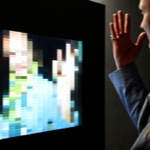
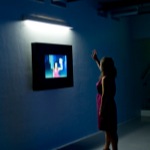
2010 - ARCO '10, Haunch of Venison, Madrid, Spain
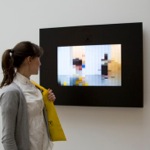
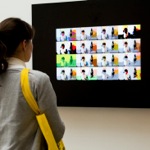
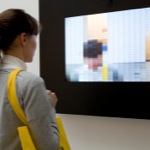
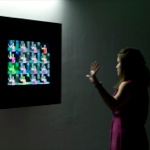
2009 - Haunch of Venison, New York City, New York, United States