Pulse Agglomerate
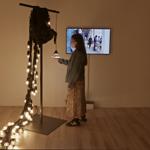
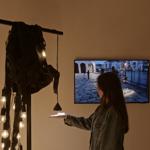
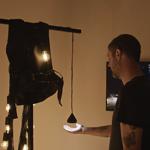
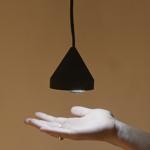
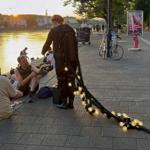
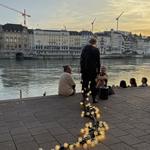
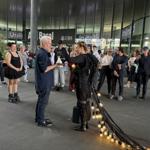
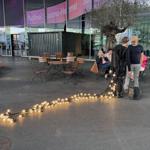
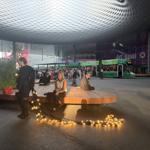
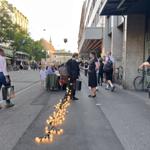
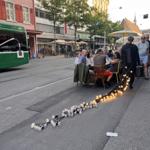
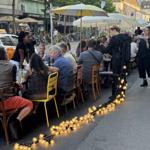
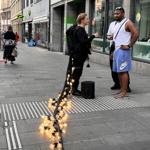
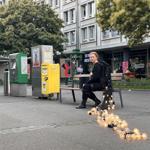
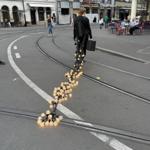
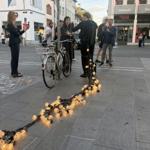
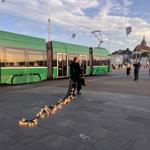
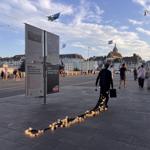
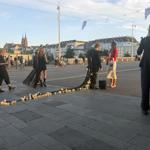
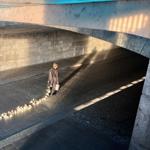
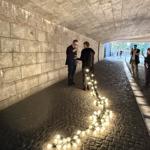
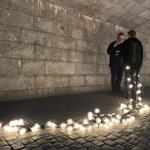
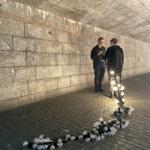
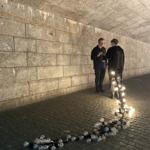
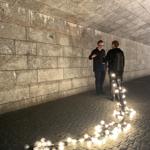
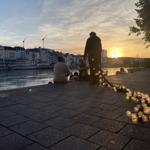
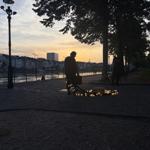
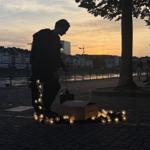
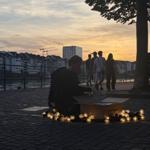
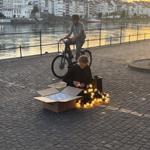
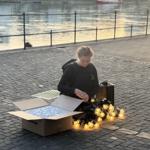
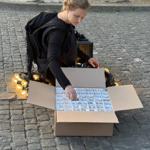
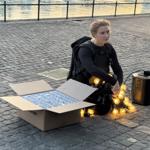
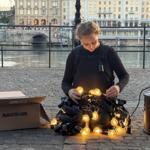
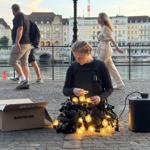
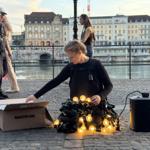
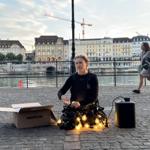
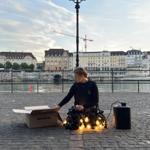
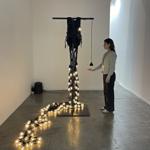
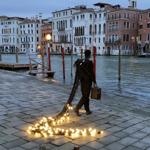
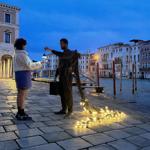
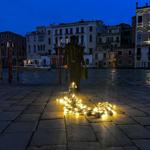
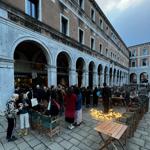
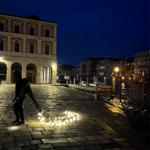
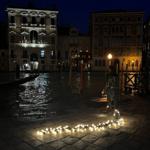
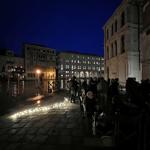
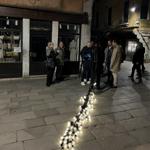
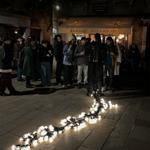
"Pulse Agglomerate," a biometric memorial performance, was presented during the 60th Venice Biennale (2024). The piece consisted of a wearable armature that powered, controlled, and hauled hundreds of lightbulbs, each glimmering to the pulse of a different participant from the past. The performer wearing the piece walked around the streets of Venice, collecting one hundred heartbeats.
The heartbeats used at the beginning of the performance were recordings from the 2013 Pulse Room installation in the IZOLYATSIA Foundation in Donetsk, Ukraine, which took place shortly before armed representatives of the Russian Federation seized the territory. The non-profit, non-governmental art foundation was forced to move to Kyiv and the original exhibition site was occupied and destroyed.
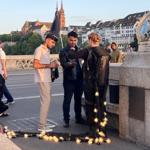
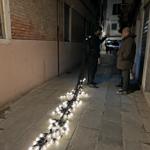
During "Pulse Agglomerate," people could use an onboard pulse sensor to add their heartbeat to the group of recordings, with the newest recording replacing the oldest. In this way, the piece was a mournful gesture in the face of ongoing war and a symbol of continuity and resilience.
The project pays homage to several precedents in the history of art. In 1956, Japanese Gutai artist Atsuko Tanaka wore The Electric Dress, composed solely of lightbulbs of all shapes and sizes. In 1960, Mexican director Roberto Gavaldón released the film Macario: in one scene, suffering from hallucinations caused by hunger, the protagonist sees all people represented by flickering candles in a cave. In 1972, Canadian-born, California-based artist Jack Goldstein, buried himself alive—with a stethoscope attached to his chest, he breathed air from plastic tubes while a red light above ground flashed to the rhythm of his beating heart.
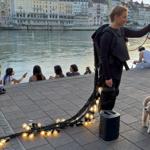
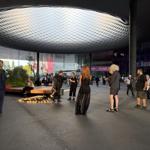
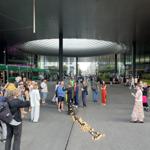
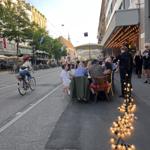
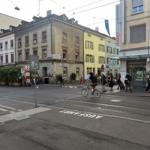
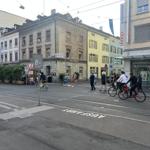
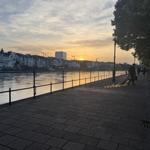
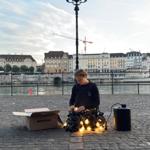
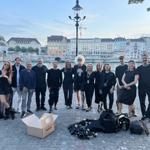
In 2026 the project was performed by Ukrainian artist Maria Kulikovska in Basel during Art Basel. The piece was acquired by the CityX Foundation, headed by Asya Nikolaeva, who will donate it to a salient contemporary art museum collection, ensuring its long-term preservation and public access—serving as both a historical record and a living memorial—carrying forward the pulses of those who gathered in Donetsk shortly before
the war transformed the region.
The heartbeats used at the beginning of the performance were recordings from the 2013 Pulse Room installation in the IZOLYATSIA Foundation in Donetsk, Ukraine, which took place shortly before armed representatives of the Russian Federation seized the territory. The non-profit, non-governmental art foundation was forced to move to Kyiv and the original exhibition site was occupied and destroyed.
During "Pulse Agglomerate," people could use an onboard pulse sensor to add their heartbeat to the group of recordings, with the newest recording replacing the oldest. In this way, the piece was a mournful gesture in the face of ongoing war and a symbol of continuity and resilience.
The project pays homage to several precedents in the history of art. In 1956, Japanese Gutai artist Atsuko Tanaka wore The Electric Dress, composed solely of lightbulbs of all shapes and sizes. In 1960, Mexican director Roberto Gavaldón released the film Macario: in one scene, suffering from hallucinations caused by hunger, the protagonist sees all people represented by flickering candles in a cave. In 1972, Canadian-born, California-based artist Jack Goldstein, buried himself alive—with a stethoscope attached to his chest, he breathed air from plastic tubes while a red light above ground flashed to the rhythm of his beating heart.
In 2026 the project was performed by Ukrainian artist Maria Kulikovska in Basel during Art Basel. The piece was acquired by the CityX Foundation, headed by Asya Nikolaeva, who will donate it to a salient contemporary art museum collection, ensuring its long-term preservation and public access—serving as both a historical record and a living memorial—carrying forward the pulses of those who gathered in Donetsk shortly before
the war transformed the region.
General info
Spanish name:
Aglomeración de Corazonadas
Year of creation:
2024
1: Donetsk - Venice
Technique:
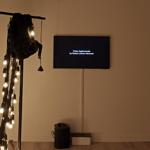
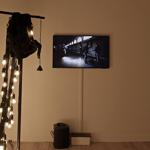
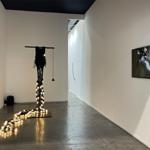
Armature with integrated electronics, LED filament polycarbonate light bulbs, LED light dimmers, photoplethysmography sensor, speaker, computer, custom made aluminium stand, display
Power:
110-240V 500W
Dimensions:
Armature: height: 180 cm, baseplate: 80 cm x 80 cm / trail of bulbs 2-3 meters long
Display: 43”
Display: 43”
Weight:
Self standing
Additional info:
Performed by Gregorio Magnifici in Venice, and Maria Kulikovska in Basel. Collected one hundred heartbeats from Venice in 2024 and from Basel in 2026.
Keywords:
Edition:
1 Edition
Exhibitions
- Panoptic Chiasma, Gallerists collaboration (bitforms Gallery, Galería Max Estrella), Zero 10 by Art Basel, Basel, Switzerland, 2026.
- Pulse Agglomerate, IZOLYATSIA, Platform for Cultural Initiatives, Art Basel, Basel, Switzerland, 2026.
- ZONAMACO, Galería Max Estrella, Mexico City, México, 2026.
- Pulse Agglomerate, Atelier Lozano-Hemmer, Venice, Italy, 2024.
Credits
- Performer: Gregorio Magnifichi in Venice, Maria Kulikovska in Basel
- Production Assistance: Karine Charbonneau, Gabriel Rizzotti, Leigh Kotsilidis, Gastón Ramirez, Véronique Dufour
- Programming and Hardware: Stephan Schulz
- Programming Assistance: Lauria Clarke, Emily Green, William Sutton
Bibliography
- "Pulse Agglomerate 2026." IZOLYATSIA, 19 June 2026. Kiev, Ukraine, 2026. (english) (Websites)
- Embassy of Ukraine to the UK. "Canadian-Mexican artist Rafael Lozano-Hemmer performed the performance Pulse Agglomerate." Embassy of Ukraine to the UK, 29 Apr. 2024. United Kingdom, 2026. (english and ukranian) (Social Media)
- Monaghan-Coombs, Sophie . "Art Basel brings fun back to the fair with the element of surprise." Monocle, 18 June 2026. 2026. (english) (Magazines)
- Mykhailenko, Dariia. "Donetsk Pulse Room Archive Becomes “Pulse Agglomerate” Performance at Art Basel 2026." United24 Media, June 2026. Donetsk, Ukraine, 2026. (english) (Websites)
- United24. "A performance dedicated to Donetsk took place in Venice." LinkedIn, 23 Apr. 2024. 2024. (english) (Social Media)
Photo Library (click to expand)
2026 - Pulse Agglomerate Performance, Basel, Switzerland




2026 - ZONAMACO, Galería Max Estrella, Mexico City, México
2024 - Atelier Lozano-Hemmer, Venice, Italy


2024 - Antimodular Studio, Montréal, Canada