Global Level of Confidence
The Work
Visit the artwork site here
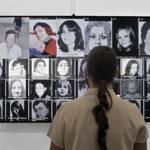
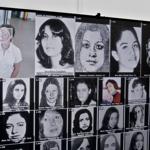
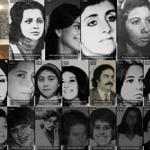
Global Level of Confidence aims to create a connection between the disappeared and the children of the disappeared in Argentina. Under the dictatorship (1976–1983), military personnel disappeared an estimated 30,000 individuals. Today, there are hundreds of children of the disappeared who do not know the identities of their parents.
Working in collaboration with Argentina's National Bank of Genetic Data (Banco Nacional de Datos Genéticos), the public and systematic archive of genetic material and biological samples of relatives of people kidnapped and disappeared during the Argentine military dictatorship, an AI has been trained with the growing database of records that document the identities of the disappeared.
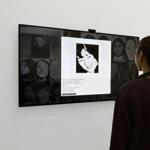
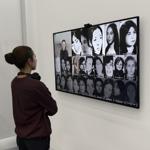
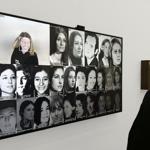
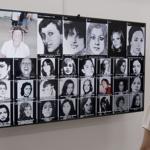
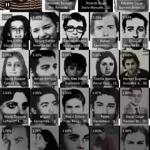
To perform the biometric search, visitors' facial landmarks, registered by their webcams, are analyzed and sent to a secure server in Iceland. The platform will scan its nearly 10,000 records for physiological affinities and offer the top 15 to 30 potential fraternal connections between the visitor's facial landmarks and the faces documented in its archive. Visitors can select the possible connections and read more about each individual. The amount of possible connections shown varies depending on the size of the screen that is being used. Global Level of Confidence is built for mobile and desktop devices, and large displays.
The platform uses face-api.js for face matching & extracting facial landmarks and MediaPipe for real-time face detection. It is important to note that the platform does not store data; it only analyzes data points, which are facial landmarks.
Global Level of Confidence continues the research started in 2015 with Level of Confidence, an art project made to commemorate the mass kidnapping of 43 students from the Ayotzinapa normalista school in Iguala, Guerrero, Mexico.
The Context
On 24 March 1976, the Armed Forces, with the support of civilian sectors, carried out a coup d'état in Argentina, overthrowing the government of President María Estela Martínez de Perón. From then on, the situation changed completely: political parties and Congress were dissolved, freedom of the press and freedom of expression were abolished, and the constitutional guarantees of all citizens were suspended. Thus began one of the darkest periods in Argentine history, which lasted until 10 December 1983.
During those years, the State deployed its repressive apparatus to carry out the persecution, torture, assassinations and systematic and forced disappearances of thousands of people, mostly activists, workers, students and people linked to political or social movements. These murders were followed by clandestine burials in mass graves, burials as unidentified persons (NN) in cemeteries, and death flights throwing corpses and live people into the Río de la Plata. For this purpose, public force was used illegally and more than 500 clandestine detention centres were set up throughout the country.
One of the most atrocious practices implemented during state terrorism was the abduction and appropriation of minors, an unprecedented action until then. Approximately 500 children were taken from their families, either kidnapped with their parents or born in captivity in clandestine maternity wards. The military considered that these children should not grow up in their families of origin, so they were handed over to families linked to the dictatorship or abandoned in institutions, depriving them of their identity and their right to know their true history.
In the midst of the climate of terror and repression, the relatives of the disappeared began to organise themselves to demand answers about the whereabouts of their loved ones. In the midst of the dictatorship, they confronted the reigning fear and became the first to question the Armed Forces, demanding information on the whereabouts of their disappeared relatives. Thus was born the human rights movement in Argentina led by organisations such as the Mothers and Grandmothers of Plaza de Mayo, founded in 1977. These organisations played a fundamental role in denouncing the crimes committed, both nationally and internationally. The path of the Mothers and Grandmothers was different, despite having emerged from the same painful event. The former undertook the search for their abducted and disappeared children, while the latter, in addition to demanding the whereabouts of their relatives, had the urgency to organise themselves for a specific objective: that the abducted children be returned to their real homes. This is the motive that guides their struggle to this day, having so far achieved the restitution of 138 identities, as well as having become an emblematic collective in the struggle for justice against state violence and in the construction of collective memory, both in Argentine political history and in human rights causes around the world.
The years of dictatorship left deep wounds that remain open in Argentine society, scarring entire generations. The struggle for Memory, Truth and Justice became a fundamental pillar to begin to heal these scars and to build a more just and democratic society. It is through these public policies that we seek to keep the memory of the victims alive, to restore the stolen identities through forensic science and to guarantee that these crimes against humanity will never be repeated ‘Never Again’.
Visit the artwork site here
Global Level of Confidence aims to create a connection between the disappeared and the children of the disappeared in Argentina. Under the dictatorship (1976–1983), military personnel disappeared an estimated 30,000 individuals. Today, there are hundreds of children of the disappeared who do not know the identities of their parents.
Working in collaboration with Argentina's National Bank of Genetic Data (Banco Nacional de Datos Genéticos), the public and systematic archive of genetic material and biological samples of relatives of people kidnapped and disappeared during the Argentine military dictatorship, an AI has been trained with the growing database of records that document the identities of the disappeared.
To perform the biometric search, visitors' facial landmarks, registered by their webcams, are analyzed and sent to a secure server in Iceland. The platform will scan its nearly 10,000 records for physiological affinities and offer the top 15 to 30 potential fraternal connections between the visitor's facial landmarks and the faces documented in its archive. Visitors can select the possible connections and read more about each individual. The amount of possible connections shown varies depending on the size of the screen that is being used. Global Level of Confidence is built for mobile and desktop devices, and large displays.
The platform uses face-api.js for face matching & extracting facial landmarks and MediaPipe for real-time face detection. It is important to note that the platform does not store data; it only analyzes data points, which are facial landmarks.
Global Level of Confidence continues the research started in 2015 with Level of Confidence, an art project made to commemorate the mass kidnapping of 43 students from the Ayotzinapa normalista school in Iguala, Guerrero, Mexico.
The Context
On 24 March 1976, the Armed Forces, with the support of civilian sectors, carried out a coup d'état in Argentina, overthrowing the government of President María Estela Martínez de Perón. From then on, the situation changed completely: political parties and Congress were dissolved, freedom of the press and freedom of expression were abolished, and the constitutional guarantees of all citizens were suspended. Thus began one of the darkest periods in Argentine history, which lasted until 10 December 1983.
During those years, the State deployed its repressive apparatus to carry out the persecution, torture, assassinations and systematic and forced disappearances of thousands of people, mostly activists, workers, students and people linked to political or social movements. These murders were followed by clandestine burials in mass graves, burials as unidentified persons (NN) in cemeteries, and death flights throwing corpses and live people into the Río de la Plata. For this purpose, public force was used illegally and more than 500 clandestine detention centres were set up throughout the country.
One of the most atrocious practices implemented during state terrorism was the abduction and appropriation of minors, an unprecedented action until then. Approximately 500 children were taken from their families, either kidnapped with their parents or born in captivity in clandestine maternity wards. The military considered that these children should not grow up in their families of origin, so they were handed over to families linked to the dictatorship or abandoned in institutions, depriving them of their identity and their right to know their true history.
In the midst of the climate of terror and repression, the relatives of the disappeared began to organise themselves to demand answers about the whereabouts of their loved ones. In the midst of the dictatorship, they confronted the reigning fear and became the first to question the Armed Forces, demanding information on the whereabouts of their disappeared relatives. Thus was born the human rights movement in Argentina led by organisations such as the Mothers and Grandmothers of Plaza de Mayo, founded in 1977. These organisations played a fundamental role in denouncing the crimes committed, both nationally and internationally. The path of the Mothers and Grandmothers was different, despite having emerged from the same painful event. The former undertook the search for their abducted and disappeared children, while the latter, in addition to demanding the whereabouts of their relatives, had the urgency to organise themselves for a specific objective: that the abducted children be returned to their real homes. This is the motive that guides their struggle to this day, having so far achieved the restitution of 138 identities, as well as having become an emblematic collective in the struggle for justice against state violence and in the construction of collective memory, both in Argentine political history and in human rights causes around the world.
The years of dictatorship left deep wounds that remain open in Argentine society, scarring entire generations. The struggle for Memory, Truth and Justice became a fundamental pillar to begin to heal these scars and to build a more just and democratic society. It is through these public policies that we seek to keep the memory of the victims alive, to restore the stolen identities through forensic science and to guarantee that these crimes against humanity will never be repeated ‘Never Again’.
General info
Spanish name:
Nivel de Confianza Global
Year of creation:
2025
Argentina
Technique:
Face-recognition algorithms, computer, display, webcam
Dimensions:
Variable, any fullHD screen can show the project
Keywords:
Exhibitions
- Ars Electronica Festival 2026, Ars Electronica Festival, Linz, Austria, 2026.
- The Illusion of Thinking, V2_, V2_, Rotterdam, Netherlands, 2025 - 2026.
Credits
- In collaboration with: Madres de la Plaza de Mayo, Banco Genético de Argentina
- Software: Lauria Clarke, Saralin Zassman, Julian Oliver, David Robert
Bibliography
- Weigl, Florian. "Interview with Rafael Lozano-Hemmer." The Illusion of Thinking, V2 Publishing, 33-39. Netherlands, 2026. (english) (Books)
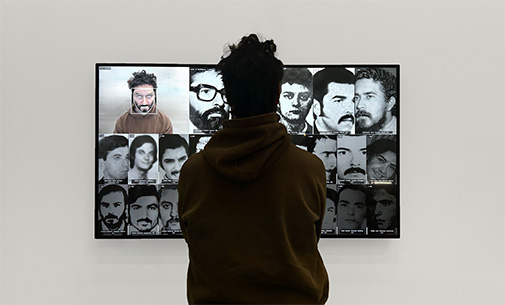
Photo Library (click to expand)
2026 - Ars Electronica Festival, Linz, Austria


2025 - Antimodular Studio, Montreal, QC, Canada